
As modular buildings become more widely used as a viable construction method, organisations need to ask about accessibility. The good news is that modular buildings' flexibility makes them an ideal solution for providing inclusive, compliant, and dignified spaces.
Accessibility is now not merely a design preference; it is a legal requirement and a foundation of corporate social responsibility. At GCS Group, we know that modular buildings in the UK are setting new standards for accessibility across the education, healthcare, and commercial sectors.
In the United Kingdom, over 16 million people live with a disability. This includes more than 5 million disabled people currently in the workforce. When a business or school invests in new infrastructure, failing to prioritise accessibility is not just a social oversight; it is a significant operational risk.
Modern modular buildings are uniquely suited to address these needs. Because these structures are manufactured in controlled factory environments, precision is guaranteed. This allows for the seamless integration of complex accessibility features that might be difficult or more costly to retrofit into a traditional site-built structure.
With any building project, the primary concern is often compliance. When commissioning modular buildings in the UK, adherence to Building Regulations is mandatory. Specifically, Part M of the Building Regulations (Access to and use of buildings) sets the minimum standards to ensure people can access and use a building and its facilities.
Beyond the baseline of Part M, many organisations aim for the "Gold Standard" by following BS 8300. This British Standard provides code of practice recommendations for the design of buildings to meet the needs of disabled people. At GCS, we work closely with clients to ensure that every modular unit not only meets these legal requirements but also exceeds them, providing a truly inclusive environment.
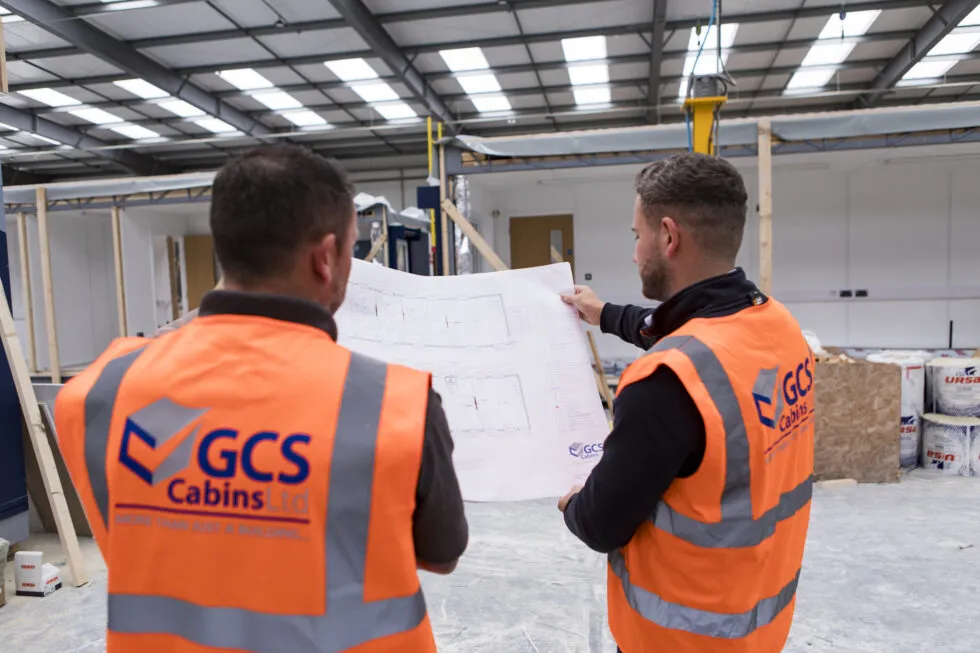
Accessibility begins at the perimeter of the site and extends to every internal fixture. When partnering with reputable modular building companies, you should expect a holistic approach to design.
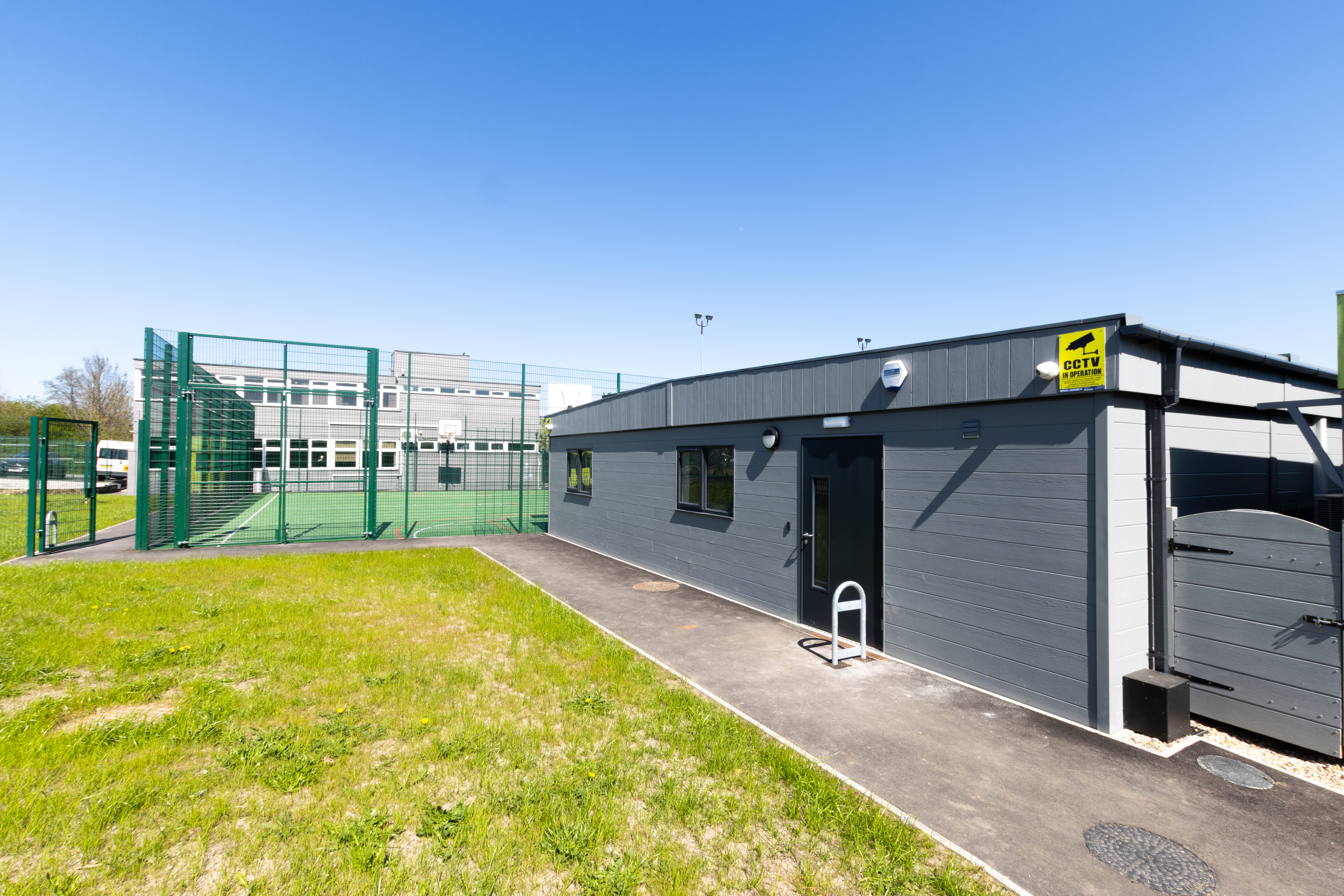
The transition from the exterior to the interior must be seamless. While traditional builds may struggle with existing topography, the modular approach allows for the integration of:
Integrated Ramp Systems: Purpose-built ramps with non-slip surfaces and appropriate gradients (typically 1:15 or 1:20) are designed alongside the building modules to ensure a perfect fit.
Automated Entry Points: Access control on external doors, including sensor-driven sliding doors or low-resistance outward-opening doors, ensures that those with limited mobility or strength can enter unassisted.
Threshold-Free Entry: Precision engineering in the factory ensures that floor levels are perfectly flush, eliminating the trip hazards often found in older portable structures.
One of the greatest myths regarding modular buildings is that they are cramped. In reality, the modular method offers the flexibility to create expansive, open-plan layouts. For a space to be truly accessible, it must accommodate the "turning circle" of a standard wheelchair (typically 1500mm).
During planning, you must consider the flow of traffic. Wide corridors, recessed storage to prevent obstructions, and strategic placement of structural columns all contribute to a building that feels intuitive and easy to navigate.
Different sectors require different accessibility solutions. A modular office block for a corporate client will have different requirements than a Special Educational Needs (SEN) classroom.
Appropriate wheelchair-accessible toilets, showers, and hygiene suites are critical to protecting the dignity of occupants. Within a modular framework, we can install:
Weight-Bearing Ceiling Track Hoists: These are integrated into the module's structural steel frame during manufacturing, providing much higher levels of safety and durability than retrofitted versions.
Height-Adjustable Sanitaryware: From washbasins to changing benches, these features allow the facility to cater to users with varying needs.
Anti-Scald Technology: Thermostatic mixing valves are standard features to prevent injury, particularly in environments serving vulnerable adults or children.
Accessibility is not always about physical mobility. Many disabilities are non-visible, such as autism or sensory processing disorders. The controlled manufacturing process of modular buildings allows for superior acoustic and lighting control:
Acoustic Insulation: We use heavy-duty plasterboard and specialist insulation to provide soundproofing up to and exceeding a 35db rating. This is vital for creating "quiet zones" or intervention rooms.
Advanced Lighting Control: Dimmable LED systems and the maximisation of natural light through electronically controlled roof skylights help regulate the environment for those with sensory sensitivities.
Material Selection: The choice of textures and non-reflective materials can significantly reduce anxiety for neurodivergent occupants.
When comparing modular building companies to traditional contractors, several advantages become clear, particularly regarding the delivery of accessible spaces.
1. Consistency and Quality Control
Because modules are built in a factory, every accessibility feature is tested before it leaves the site. A grab rail or a call button is not an afterthought added by a subcontractor on a rainy building site; it is a fundamental part of the engineered design.
2. Speed of Installation
For schools or hospitals, time is often the biggest constraint. An accessible modular extension can be installed during a half-term break or a quiet weekend, minimising disruption to existing staff and students who may already be navigating the site with mobility challenges.
3. Future-Proofing and Flexibility
The modular nature of these buildings means they can be adapted. If the needs of your workforce or student body change, modular sections can often be reconfigured or expanded with relative ease compared to the demolition and reconstruction required in traditional masonry buildings.
In current construction projects, sustainability is as important as accessibility. Fortunately, these goals often align. For instance, large bi-fold doors that provide easy access to outdoor learning spaces also improve natural ventilation and reduce the need for artificial cooling.
Modular buildings are manufactured from high-performance materials that deliver excellent thermal efficiency. This means lower lifecycle costs and a building that remains comfortable for all users, regardless of their physical requirements or sensitivity to temperature.
Professional environments require a high degree of durability. Features such as finger guards on doors and windows are essential in high-traffic areas, while impact-resistant internal walls ensure the building can withstand the heavy use of wheelchairs or medical equipment without constant maintenance.
At GCS, we understand that every project presents unique challenges. Our project managers are at the forefront of the industry, working directly with manufacturers to develop bespoke solutions for our clients. We recognise that "standard" is often not enough when it comes to inclusion.
Whether you require a single portable unit with an accessible toilet or a multi-storey modular complex with integrated lifts and sensory suites, we have the expertise to deliver. We take the time to understand the specific needs of your occupants, ensuring that the final building is a tool for empowerment rather than a barrier.
If you are planning a project and want to ensure it meets the highest accessibility standards while remaining within budget and on schedule, we can help.
Contact GCS today to discuss how we can help you achieve an inclusive, professional modular building for a great future.