

Reaching net-zero has become a priority for organisations across the UK. Whether you’re responding to environmental commitments, legislation or simply looking to reduce operating costs, finding practical ways to lower your carbon footprint is likely to be high on your agenda.
Construction plays an important role in that journey. Traditional building methods can consume significant amounts of materials, create substantial waste and involve lengthy on-site works. By comparison, modular buildings offer a different approach that aligns with many sustainability goals from the very beginning of a project.
If your organisation is looking for an environmentally conscious way to expand or improve its facilities, an experienced modular building manufacturer like GCS Group can help you to create high-quality, energy-efficient spaces that support your wider net-zero ambitions.
Net-zero refers to balancing the amount of greenhouse gases your business produces with the amount removed from the atmosphere. While you may already be reducing emissions through renewable energy, more efficient transport or changes to your day-to-day operations, the buildings you add to your site and occupy also have a significant environmental impact.
Every stage of a building’s lifecycle contributes to carbon emissions, from sourcing materials and manufacturing components to construction, operation and eventual refurbishment or replacement. Making smarter decisions during the design an construction phase can therefore deliver lasting environmental benefits. This is one reason why UK modular buildings have become such an attractive option for businesses looking to build in a more sustainable way.
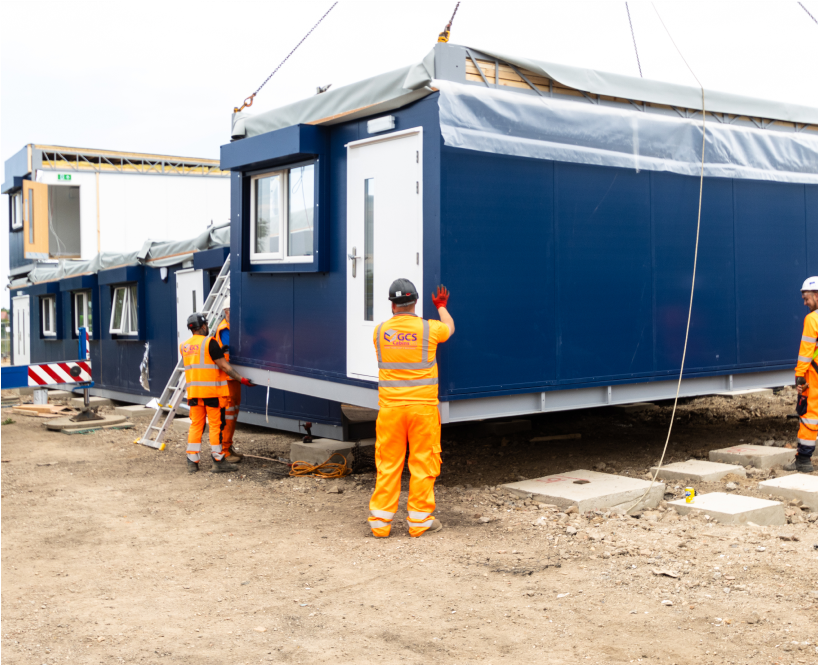
One of the biggest environmental advantages of modular construction is the way the buildings are manufactured. Instead of carrying out the majority of work on-site, modules are produced in controlled factory environments before being transported for installation. This allows materials to be measured more accurately, reducing unnecessary waste and making better use of available resources. Factory production also allows unused materials to be reused or recycled more efficiently, minimising the volume of waste sent to landfill.
If reducing waste forms part of your sustainability strategy, modular construction offers a practical way to make progress before your building is even installed.
Construction activity itself can contribute significantly to a project’s carbon footprint. Traditional building sites often involve multiple trades working over an extended period, resulting in increased vehicle movements, deliveries and machinery operating for weeks or even months.
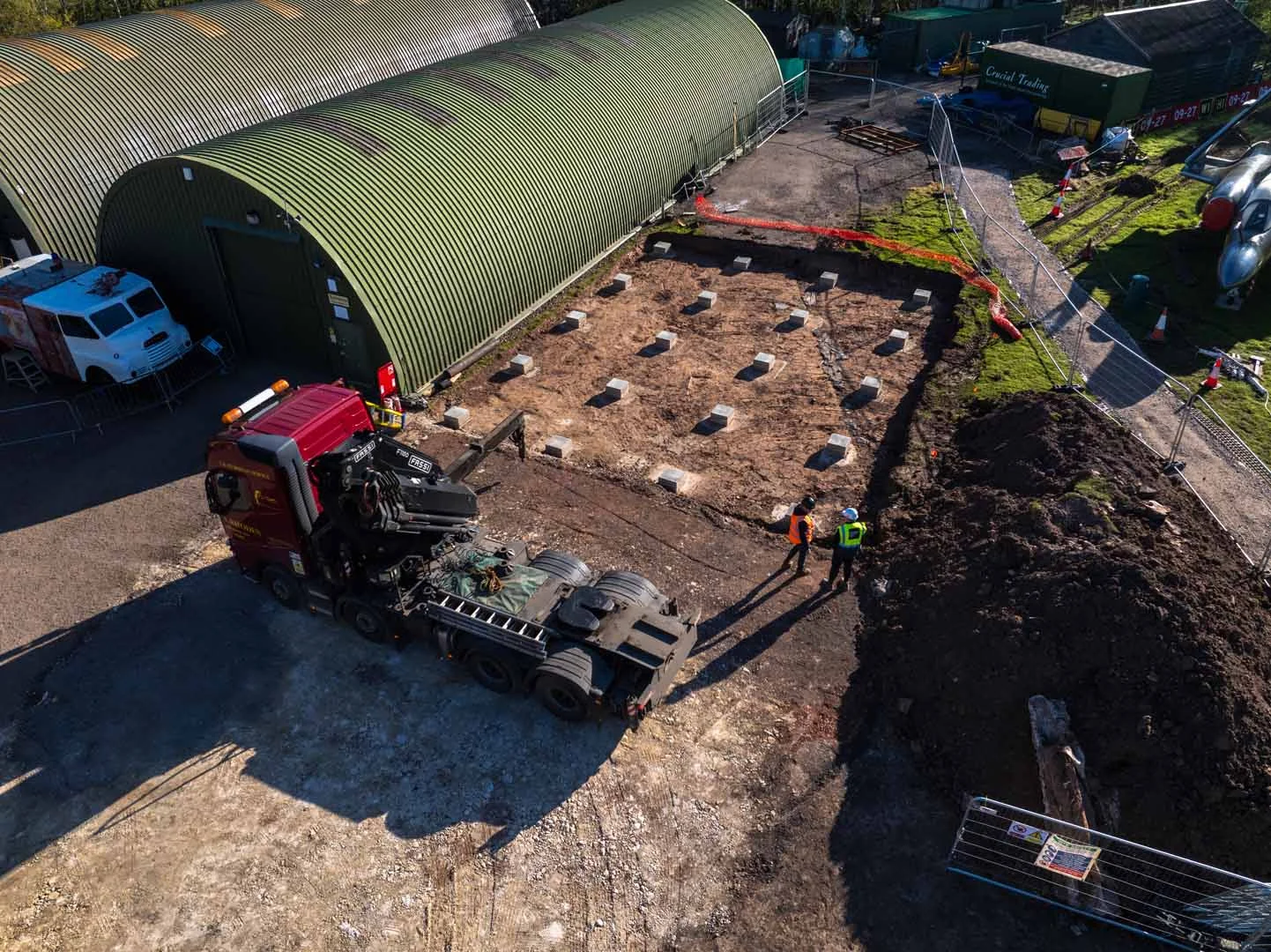
Because modular buildings arrive largely complete, installation is considerably faster. With less time spent on-site, you can reduce disruption whilst limiting some of the emissions associated with prolonged construction activity. Manufacturing indoors also helps to avoid many weather-related delays that can affect conventional builds. Though every project is different, streamlining the construction process can help your organisation to take another positive step towards reducing its environmental impact.
Net-zero is about far more than how a building is constructed, as how it performs every day is equally important. Modern modular buildings can be designed with high levels of insulation, energy-efficient glazing and effective heating and ventilation systems that reduce energy consumption throughout the building’s lifetime.
As energy prices continue to fluctuate, improving efficiency also helps you to lower operating costs whilst creating comfortable environments for your employees, customers and visitors.
You may also wish to incorporate technologies such as LED lighting, solar panels and smart building controls into your modular development, further supporting your long-term sustainability objectives.
One of the greatest strengths of modular construction is its flexibility. If your requirements change in the future, your building can often be extended, reconfigured or adapted rather than needing to be replaced entirely.
Whether your workforce grows, departments relocate or internal layouts need updating, modular spaces can evolve alongside your organisation. This adaptability maximises the lifespan of your building whilst reducing the need for future construction projects, conserving both materials and resources. If you’re planning for long-term growth, flexibility can be just as valuable as energy efficiency.
The principles behind modular construction naturally complement the growing focus on a circular economy. Rather than following the traditional pattern of build, use and demolish, modular construction encourages buildings and components to remain in use for as long as possible. Individual sections can often be refurbished, relocated or repurposed instead of being discarded. This approach reduces demand for new raw materials and extends the life of valuable construction products.
Many modular building companies, such as GCS Group, place increasing emphasis on designing buildings that can be maintained, upgraded and adapted throughout their lifespan, making sustainability an ongoing commitment rather than a one-off achievement.
Environmental performance now sits alongside social responsibility and good governance within many organisations’ Environmental, Social and Governance (ESG) strategies.
If your business has set ESG targets, investing in sustainable facilities can demonstrate your commitment to responsible practices whilst supporting wider environmental policies.
For example, modular buildings in the UK can contribute towards objectives such as:
Reducing construction waste
Lowering operational energy use
Minimising disruption during projects
Improving resource efficiency
Creating healthier working environments
Supporting long-term sustainability planning
The environmental benefits of modular construction aren’t limited to one industry. Whether you operate in healthcare, education, commercial, industrial, construction, sports and leisure or the public sector, modular construction offers a flexible way to create additional space whilst supporting your sustainability goals.
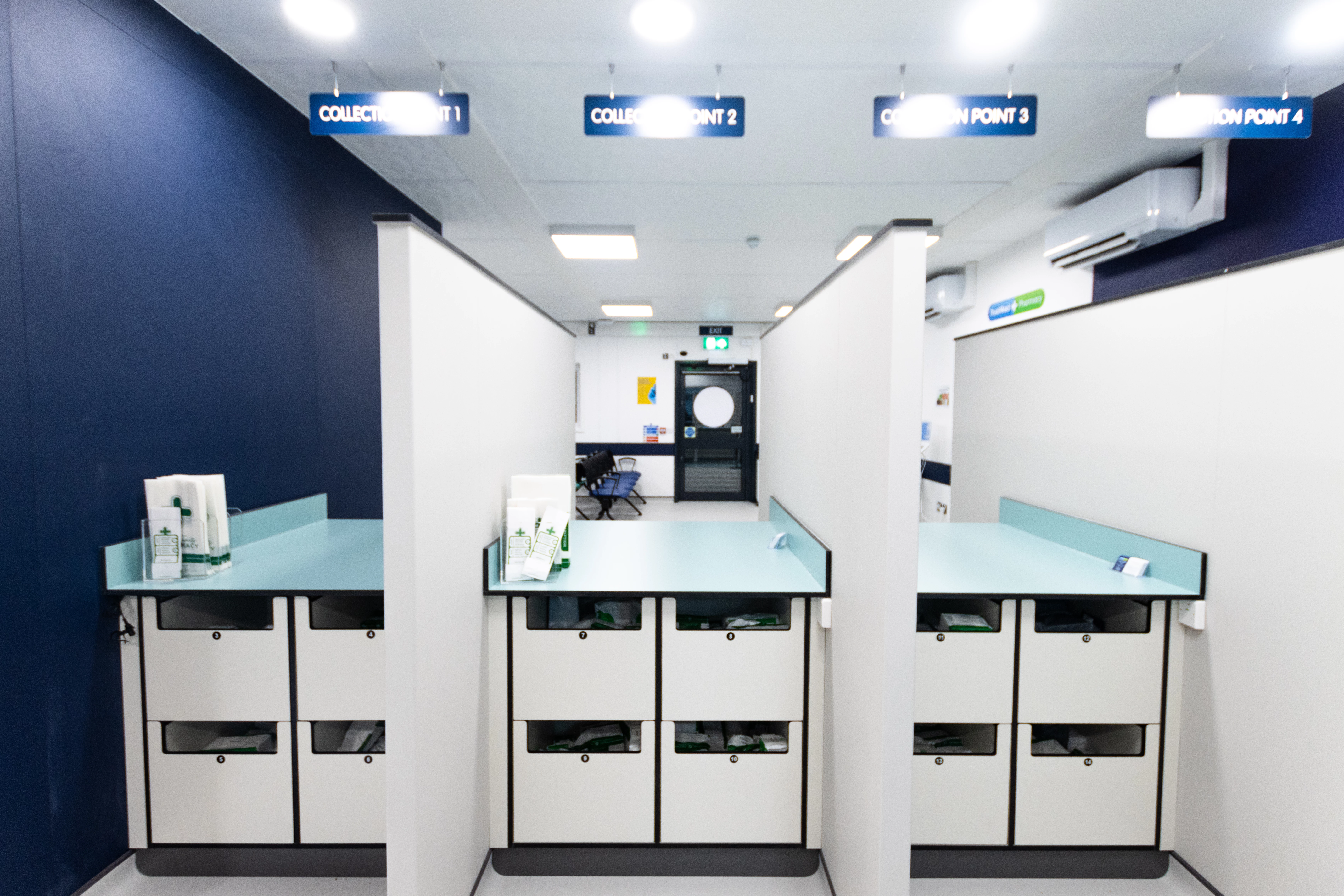
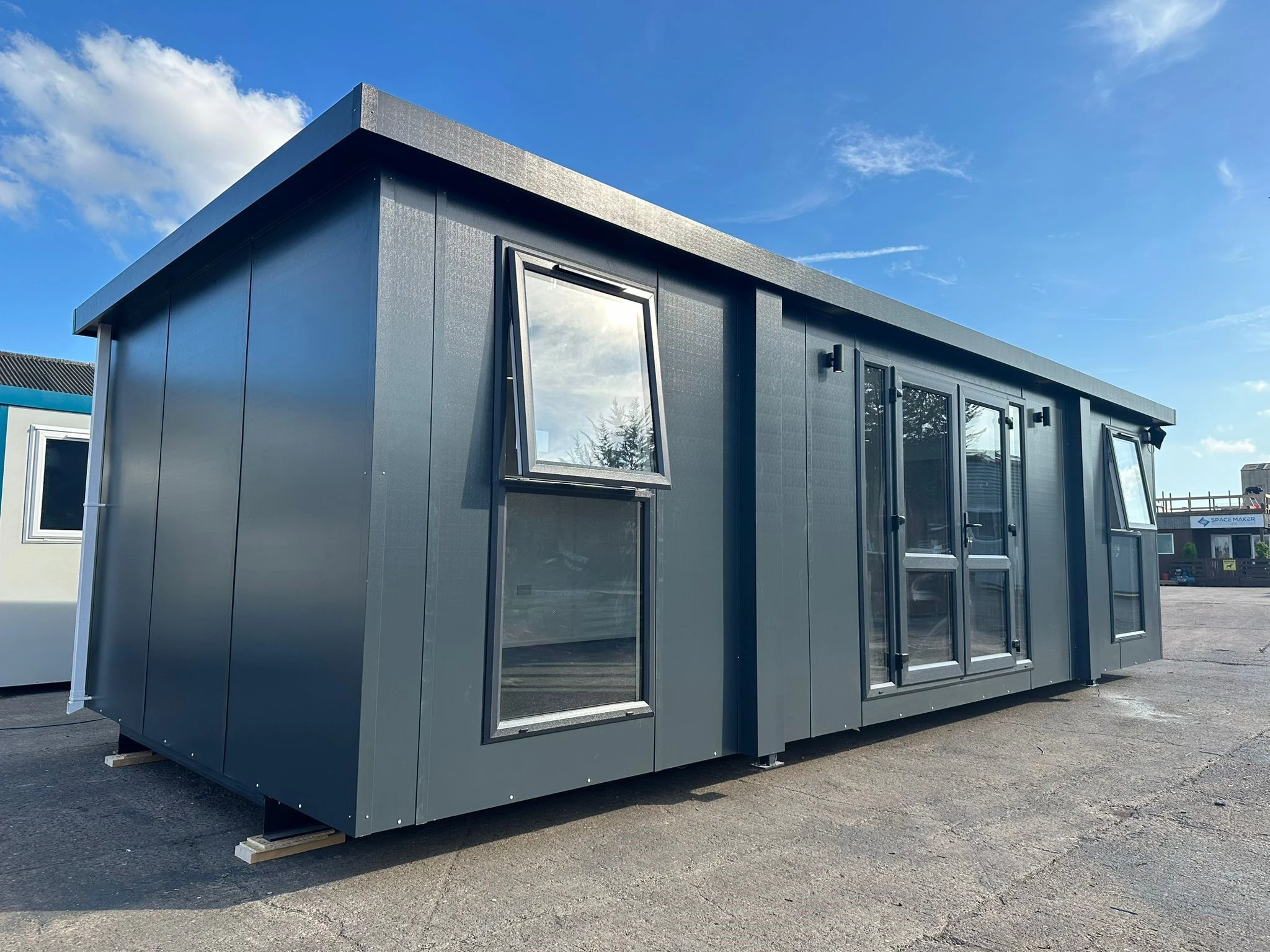
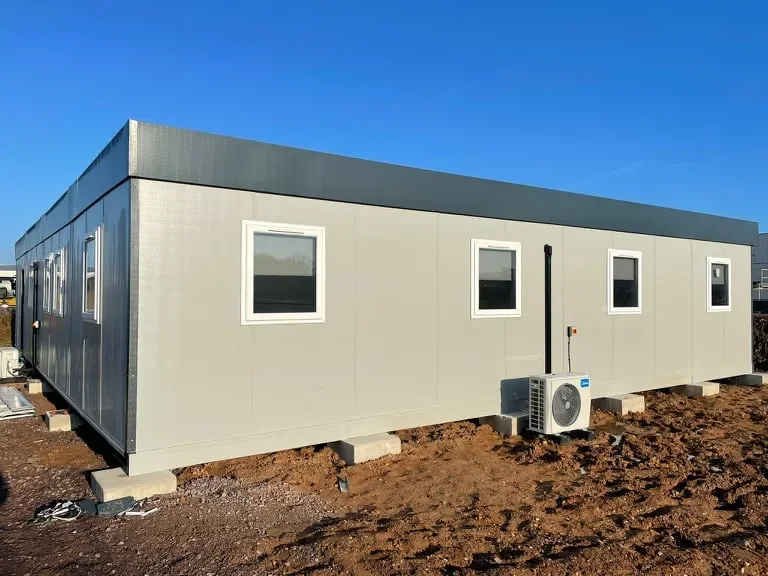
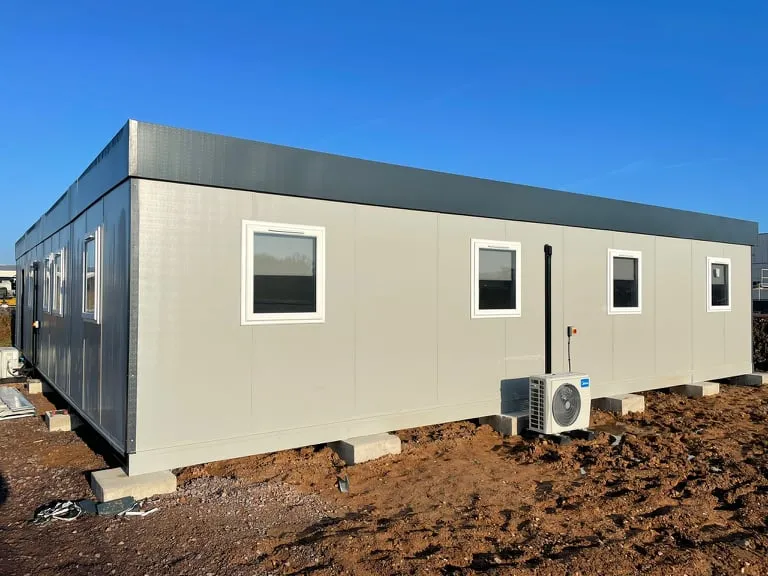
From offices and classrooms to welfare facilities and healthcare buildings, modern modular buildings allow you to expand without compromising on quality, durability or appearance. Today’s modular solutions are designed to provide permanent, high-quality environments that perform to the same standards as traditionally constructed buildings while offering greater flexibility and environmental benefits.
Achieving sustainability goals involves more than selecting the right building system. It also depends on choosing a partner with the knowledge and experience to deliver an efficient, high-quality project.
An experienced modular building manufacturer can support you through every stage of the process, from initial design and planning to build and installation. By taking the time to understand your operational requirements, we can develop a solution that balances performance, flexibility and environmental responsibility.
There’s no single solution to achieving net-zero, but every decision you make during the construction process has the potential to reduce your environmental impact. By minimising waste, improving resource efficiency, shortening construction programmes and delivering energy-efficient spaces, modular buildings provide a practical way to support your sustainability ambitions.
If you’re planning your next building project, partnering with experienced modular building companies such as GCS Group can help you to create flexible, future-ready facilities that support both your operational needs and your long-term environmental goals.
By choosing a partner who manages the logistical hurdles for you, your new space can be up and running without delay.
If you are looking for a high-quality building delivered and installed without the stress, our team is here to help. Get in touch with GCS Group today to discuss your ideas and get a free, no-obligation quote.
Gary Sheppard founded GCS Group in 2007, guiding the company through steady growth into a premier provider of portable and modular building solutions. Rooted in strong morals and core values, Gary ensures the business remains highly competitive and efficient without ever compromising on quality. He takes immense pride in the company's reputation and the long-term loyalty of GCS customers, driven by a team dedicated to excellence.